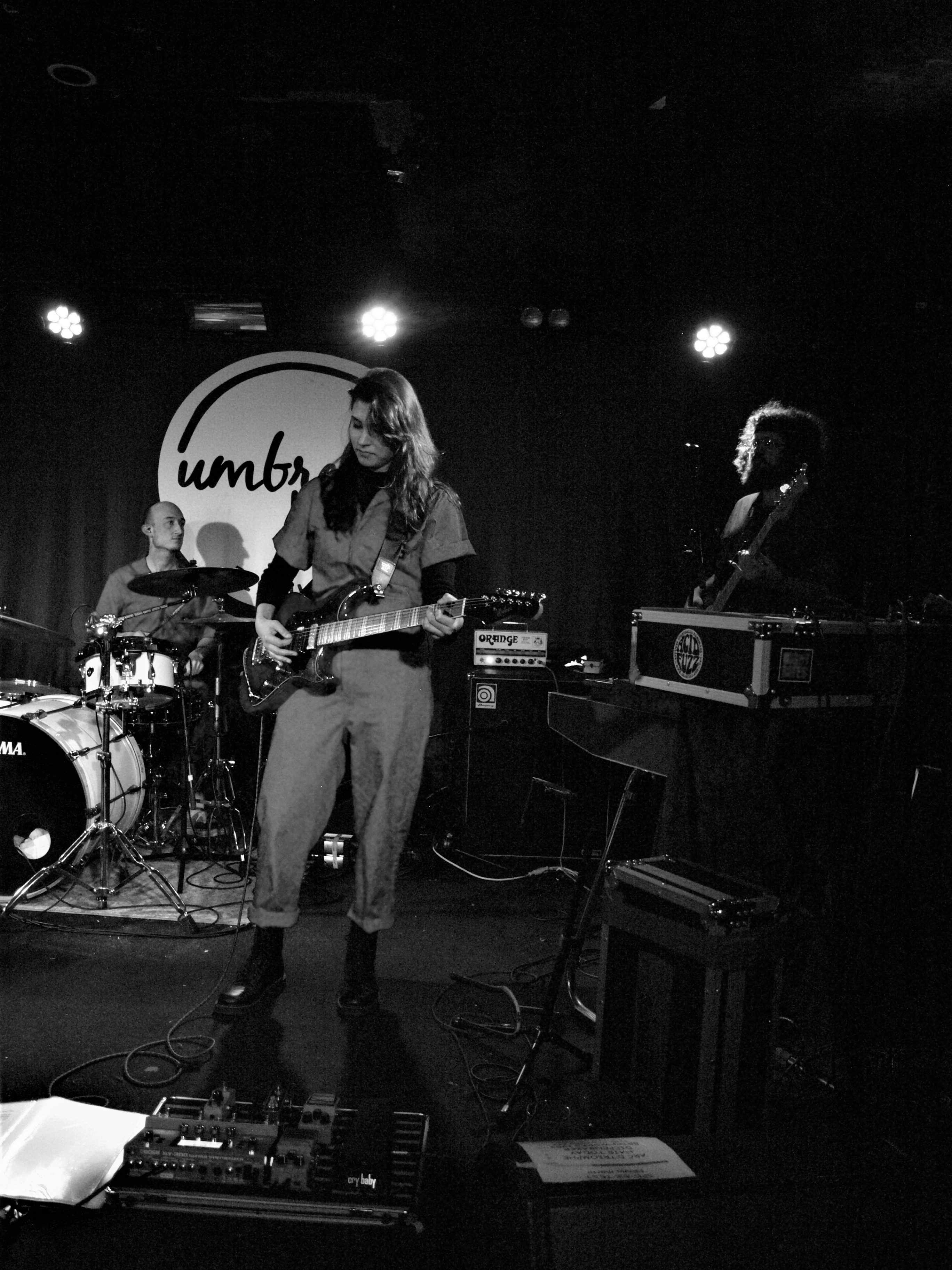
During the 1980s the Australian underground produced a number of bands that were influenced by American garage music but added their own local twist to the sound. The Triffids, Died Pretty, Beasts of Bourbon and the Scientists to name just a few. Los Palms fit well into this tradition. Their self-described psych desert jangle harks back to this 1960s garage music, but it feels like an Australian Gothic version. This is music for sun bleached landscapes and wide-open spaces.
Woozy, droning organ phases in and out of tune. Guitars alternate between adding melody, texture, and accentuating rhythm. These songs are stories, a cinematic journey to somewhere mysterious and foreboding, but also impossible to resist. The vocal melodies are strong and are treated like another instrument, another layer of atmosphere. It all comes together to produce a swirling and sometimes disorientating soundtrack to a trip into the darker recesses of the mind.
None of this amounts to much if the songs are no good. These are great. Los Palms have written nine songs that have their own character within the psych rock boundaries. The album opens with the punchy ‘Scared of Saturday Night’ and ‘I Don’t Wanna Be Cool’ – the jangly garage sound is established right out of the gate, with the latter being not unlike one of the more upbeat songs from the first half of Angel Olsen’s ‘Burn Your Fire For No Witness’. ‘Cadillac’ is a bit more of a slow burn, the solid groove of the rhythm section driving a song that feels like an epic despite being just over four minutes long. ‘Just a Sin’ could be from a modern spaghetti western soundtrack with its reverb-soaked and wiry lead guitar. ‘Sorrows’ is what we might have ended up with if Nick Cave fronted the 13th Floor Elevators. The melodic seventies soul of ‘Sandy’ brings another change of pace while ‘Sunday Death Drive’ is a rollicking bass driven slice of surf rock.
Los Palms have concocted a retro record that manages to feel fresh and timeless. Strong songs, dynamic performances, great musicianship, and attention to detail have ensured that ‘Skeleton Ranch’ is one of the best albums of 2022.
No Peace are a relatively new band on the Adelaide hardcore scene. They’ve just released their debut album Something More, sixteen minutes of furious and dynamic hardcore that will get your blood pumping. Sonic Vandals talked with Jesse and Jeremy about making the album and the inspiration for some of the songs.
Sonic Vandals: With the new album, I’m interested in what your lyrical inspiration is.
I’ve heard five songs from the record, the three that were on the promo and the two that came out recently. Some of it is talking about straight edge, that sort of thing, and the song ‘No Peace seems to be about depression. ‘16 Years’ and ‘Taking It Back’ seat to be about straight edge and the hardcore scene is.
Jesse Conte: ‘16 Years’ lyrically is more about when my dad sold my childhood house that I grew up in.
SV: Well, I got that completely wrong then.
JC: No, no it’s not about that being wrong or anything, just interpretation. Someone could probably interpret that differently. Dad sold the house and leaving that place for the final time kind of thing. I actually wrote those lyrics that last time I was there. I just whipped out my phone, I was pretty, you know, emotional about it in a good and a bad way. That’s what that was about. And then “We’re Taking it Back’ is definitely about the hardcore punk scene and having newer generation people come around and contribute to it and build it. Essentially, we’re taking it back. It’s a bit cliche, but we’re taking it back from the people that maybe didn’t deserve to be there and mistreated it and abused their power and stuff within it.
SV: It’s changed. In the late 90s and early 2000s, I didn’t feel like I wanted to be part of it back then.
JC: It’s very different.
Photo: Steven Cook
SV: Yeah, and there are certain people in my age group who are still playing in punk and hardcore bands around here who I wouldn’t want to have anything to do with because of their attitudes. There are guys around my age who are decent people, there’s plenty of them as well, but there’s certainly a few that subscribe to old school views. Using racist and ableist slurs, and shit like that in their lyrics. A couple of guys I used to go to school with have got a band that’s still active now and they’re doing that sort of thing.
JC: Yeah wow, it’s always crazy that people have this ability to just completely ignore any kind of growth and societal change.
SV: Well, that’s the thing there, they’re exactly the same as they were when we were in high school in year eight when I first met them.
JC: That’s crazy. Imagine spending that much of your life, just not growing and changing in anyway.
SV: The other song was ‘No Peace’.
JC: Yeah ‘No Peace’ I think lyrically that song is very much a reflection on giving to something when you’ve got nothing else. Not to say that I don’t have anything else, I’ve got a lot of other things in my life that are great but giving everything to something and having to scratch and crawl to make a change or to make an impact on that thing. And in this case it’s about hardcore and I guess that lyrically some of the words are using that and the things I described were like going through, you know, dark times and going through horrible things, but then knowing that you have something like the hardcore community or something like punk music to help pull you through it and give you a bit like that light at the end of the tunnel. A lot of my lyrical content is written from a place of black despair, but then seeing like that hope at the end of the tunnel.
SV: Yeah, it’s a quality of hardcore, that’s what the scene’s about.
JC: Yeah, absolutely. I like to write from a place where it’s describing like what’s around me or what’s happening or how I feel. No matter how dark or negative or depressing that sounds, I always kind of flip it and have the positive take of it. I’ve never really assessed what type of lyrics I write. I write what I feel was real to me. I don’t think I could ever be too over critical or over analyze how I do it, I just do whatever comes to me, whatever feels natural, so I don’t want to be insincere in what I create or what I do.
SV: How about ‘Cut Ties’ and ‘Live With The Pain’?
JC: So ‘Cut Ties’. I rarely write lyrics that are a direct reaction to a specific thing, but I wrote that song based on Trump and the January 6th insurrection basically. And it was kind of describing his fall – I don’t want to say ‘from grace’ because he was never ‘in grace’, I think he’s always a twat. Yeah, it was almost a direct reaction – your friends will cut ties and seeing the people, just as soon as Trump started that whole insurrection, which he did, people (Trump supporters) have been like ‘oh shit, we had nothing to do with him’ cutting ties with him completely. And as soon as there was essentially, blood on his hands, he changed his opinion, and he was like ‘Oh no we shouldn’t have committed violence.’ It was a direct response to that. Whereas ‘Live with the Pain’ was more very simple lyrics, not too much going on. That was a reflection on how I’ve dislocated my shoulder like 10 times, so it’s a more literal thing. Everyone has those things that they carry around daily, they just have to live with it and find a way to either overcome or accept. It’s a direct response to that. I can show you the album listing if that helps.
SV: I’ve seen it on Bandcamp.
JC: Oh cool, yeah so.
Photo: Steven Cook
SV: That actually brings me to another question.
JC: This is amazing. Our drummer, hey bro.
(At this point No Peace drummer Jeremy Deboer walks in and Jesse introduces us)
Jeremy Deboer: What are you doing? A podcast?
JC: Yeah, that’s what the world needs another couple of white dudes making a podcast. We’re doing an audio interview, talking about the album, like the content, really.
JD: Are you recording right now?
JC: Everything you say right now is going to go straight to vinyl, we’re getting pressed.
JD: Yeah, cool evidence.
JC: You basically crashed our interview. So how did you go recording the album in the studio with me?
SV: It was basically the two of you, wasn’t it? It’s a live band but just your project.
JD: Yeah, it’s a collaboration of Jesse and Jeremy. Actually Jesse and Jesse and Jesse and Jesse and Jeremy. Yeah, it was cool. So I haven’t prepared any answers for this.
JC: How was the studio time?
JD: I was thinking about that today, about doing all that, mean it was it was good. Usually how we write is, you kind of would just put down the riff, and you’d be like I was thinking something like da dot dot dot dot dot dot or whatever for the drums, along like that.
JC: I’ll speak the drums
JD: You have a lot more hardcore influence than me, so I would just play that and then I’m gonna add something that I made up, like I think this works.
JC: You do it roughly, and then you put your own little spin on it from your influences.
SV: You’re drumming is quite different to most hardcore drummers; you’ve got a bit more of a swing to it.
JD: Yeah, so, everyone who taught me to play drums has been a jazz drummer, so I’ve been playing drums technically for 21 years. I mean I should be way better. How long that is?
JC: So I say the same about me. The studio time was a lot of fun, but because you’ve got a set amount of time, there’s always that bit of stress, so we get two or three takes into a song and be like ‘this tempo is just not working’ or we haven’t settled with it yet, so we have to do another 15 takes and by the end of getting that song you’re thinking, ‘oh cool, I’ve only got another 10 left, awesome’
JD: But I think the hardest part for me was simplifying everything. Listening to some of the tracks, like the one that Life Lair Regret (No Peace’s label) posted today, I was thinking back to when we were recording that and I remember we had to do a few takes on a couple of the parts ’cause Jack was like ‘you’re adding too much’
JC: You’re doing a lot with it.
JD: Yeah, so its heaps stripped back from what I would normally instinctively want to put in a part. But that was kind of cool too, but I’ve liked doing that more with hardcore.
JC: Cause yeah, you don’t need to do. Even the most simple beats in hardcore get big reactions.
JD: Or it pushes or accents a riff if the backing is a little bit like less wanky and less intense.
JC: Your other bands, like playing in Xile, what would you say your drumming style for Xile is like?
JD: Or Vile, I think Xile is a much more successful band. Yeah, definitely different. That’s hardcore influenced but there was much more blast beating, blasting as well.
JC: Way more technical than No Peace. I can’t comprehend that kind of stuff, so I can’t write that.
SV: Yeah, stuff like that, I can’t get my head around it, though it’s great to listen to.
JC: It’s fucking sick to watch, and you’re like ‘Oh man, that’s fucking wild’ but then I try to write it. My brain just doesn’t work like that.
JD: Well, yeah, you don’t even know how they go about approaching starting to write a song like that.
SV: So you guys wrote everything before you went into the studio and then it changed a bit while you were in there?
JD: Yeah, me and him get into a practice room and go through it and then we kind of add and subtract bits so we might make things go longer or shorter. Or like the end of the song ‘You’re Nothing’ where it’s got that beat downy…
JC: Like jungle beat Yeah, it sounds like – that part he’s (JD) taking about is almost like Rival Mob. It’s very like jungly. In the studio we lengthened it heaps, didn’t we.
JD: Yeah, yeah, and there’s even stuff that we play live, but we’re like, oh, that should probably just go for a bit longer.
JC: Like the end of ‘Live with the Pain’
JD: And because it’s like it’s so heavy and cool you want it to kind of last longer live ’cause they’re (audience members) like, yeah, I that. He’s very proud of that riff.
JC: Yeah, it’s probably my favourite riff, and it’s so simple. It’s funny, having shown a bunch of people the record now the things that I’ve put more creative effort into, like more like more effort into the riffs, more effort into the lyrics, and like what’s happening in the song are the songs that people don’t like as much and it’s these simple songs like ‘Cut Ties’ and ‘Live with the Pain’ people like.
JD: Yeah we did that with that other band Vile, we wrote, like basically a filler track. It was something that we’re just like, well, this is shit, but we need another song and then it’s everybody’s favorite song was but it’s just so caveman but heavy as.
SV: People just want to go crazy in the pit. They don’t care if you’re playing 48 notes a second, they just want something that’s going to make them move.
JC: Exactly if there’s like a vibe to it, a good riff, then people will generally enjoy it.
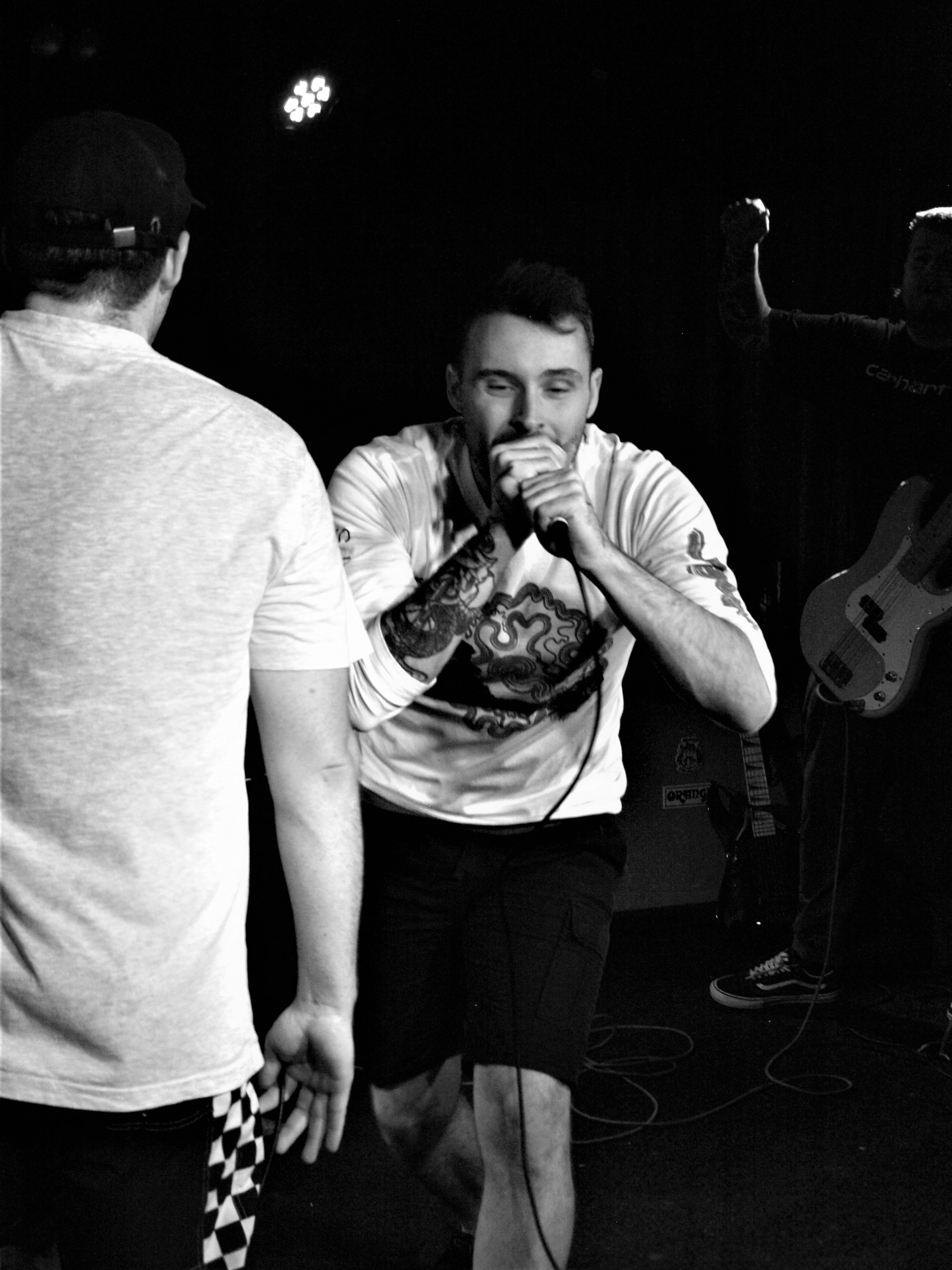
Jesse Conte on stage with Fever Shack
SV: You got quite a few guests this time.
JC: Yeah there’s quite a few guest spots.
SV: What does Kynan do?
JC: He just does a cheeky little yell in one part, but I almost didn’t say he was a guest spot ’cause it’s not really, it’s one little part sentence, but I didn’t want to –
JD: Go and do that again, forget to include someone.
JC: I didn’t want to yeah
SV: Have you forgotten someone before?
JC: Greg Bennett from Trial.
SV: On the EP.
JC: Yeah, he’s my favorite vocalist.
JD: But it was just an oversight, they forgot to write it on there.
JC: I called him and apologised and he was like ‘No, it’s fine man, shit happens, all good’ He was so nice about it, but I felt so fuckin dirty on myself. In terms of 2000s hardcore he’s all up in it like Trial, Huge and his other bands work is great as well, and I’ve gotten him sing on my nobody band from Adelaide’s record and then I forget to credit him.
SV: But you did fix it later.
JC: Yeah, I did do a little print out to put it in our 7 inches. We did credit him on Spotify and Bandcamp but there was no physical thing in the record which he found out because I sent him the record he’s like ‘Where’s my name?’
JD: Just insult to injury. Here you go buddy. Maybe when you get in a in a bigger band, I’ll write your name. Not even worth mentioning.
SV: I don’t think I really had all that many other questions, I was just interested in your creative processes behind the lyrics and then coming up with the arrangements.
JC: It’s really just Jeremy and I – I’ll write a song at home to what I think is finished and then we’ll hang out and just jam it a bunch of times.
SV: And how do you go teaching the parts to the other guys in the band for playing live.
JC: That’s really slow.
JD: It isn’t too bad these guys pick it up a lot quicker ’cause this is second lot of people that we’ve had through.
SV: So it’s not the same guys who were playing last year.
JD: No, different crew.
JC: We had some dudes drop out and some guys tag in.
JD: Basically all the members of Brainfreeze now.
JC: Pretty much, yes, Billy, Josh and Jake are all in Brainfreeze.
JD: And I’m playing in Tunnel Vision as well
JC: I thought you played in Xile
JD: We can perpetuate that rumor.
No Peace launch Something More on December 10 at Hurricane Fest. See @nopeacehc on Instagram for details.
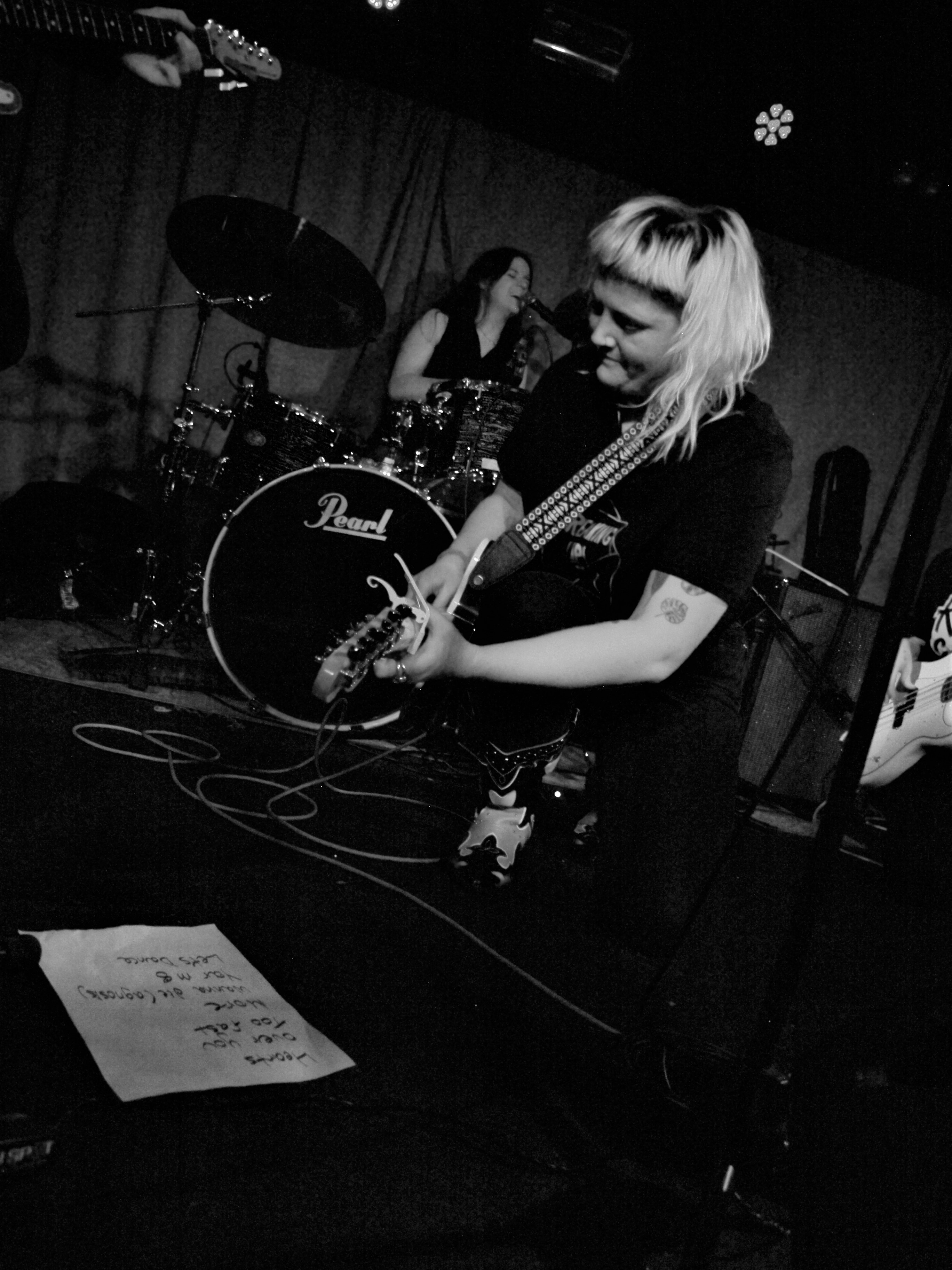
A Wednesday night gig at a packed Cranker is good for the soul. Hey Harriett’s shows are always a rush, an exchange of positive energy and a reminder that music is healing. Stephi and Storm-Lou opened the show with inspired sets of indie goodness. Though their sounds are different, both bands have great tunes with passionate delivery, and I look forward to catching them again sometime soon.
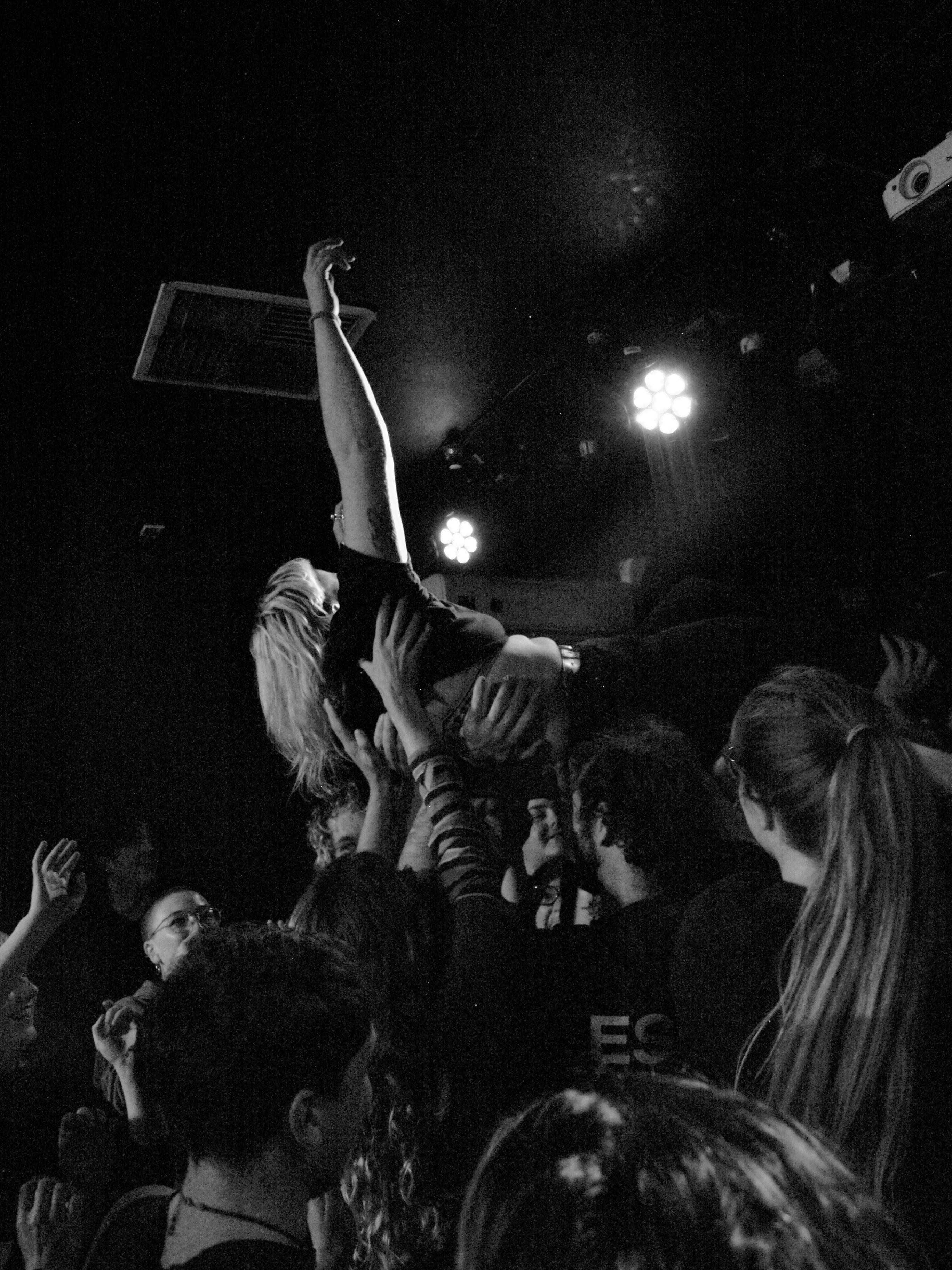
Hey Harriett opened with a spirited version of ‘Hearts in the Ocean’ that had everyone dancing from the outset, and the wild breakdown succeeded in loosening everyone up. High energy versions of ‘Over You’ and ‘Too Fast, Too Soon’ followed. ‘More’ is a slice of danceable indie rock with a heavy chorus that inspires some jumping around. It’s also the ideal song for a spot of crowd surfing. George Rochow took the opportunity of a packed and engaged Cranker crowd to tick one off her bucket list – the sea of humans carried George out into the room and back to the stage. It’s a rarity these days and the highlight of a night that was all about connection, great tunes, and rocking out.
Two new songs followed – ‘I Wanna Die (agnosis)’ and ‘Your M8’. The former is a barnstorming, punky rocker that touches on the anxiety and stress induced while awaiting a mental health diagnosis. ‘Your M8’ is in swinging 6/8 time and is about being friend zoned. Both new songs sound great, with catchy melodies and driving riffs.
The set was supposed to finish with the upbeat ‘Let’s Dance’ but there was no way the band were going to get away with just seven songs, so after some enthusiastic encouragement from the crowd we were treated to a couple of bonus songs – ‘Ventolin’ and ‘Not Allowed’. In some ways it was a typical Hey Harriett show – we got positive vibes, catharsis, and some joyful chaos. But that’s only part of what makes them great. Their enthusiasm is contagious, their songs are well crafted, arrangements creative and musicianship top notch. The connection they create at every show is something that you can’t fake.
See them August 27 at the UniBar with Rose Clouseau, Hubris and Peanut Butter Crack Babies.
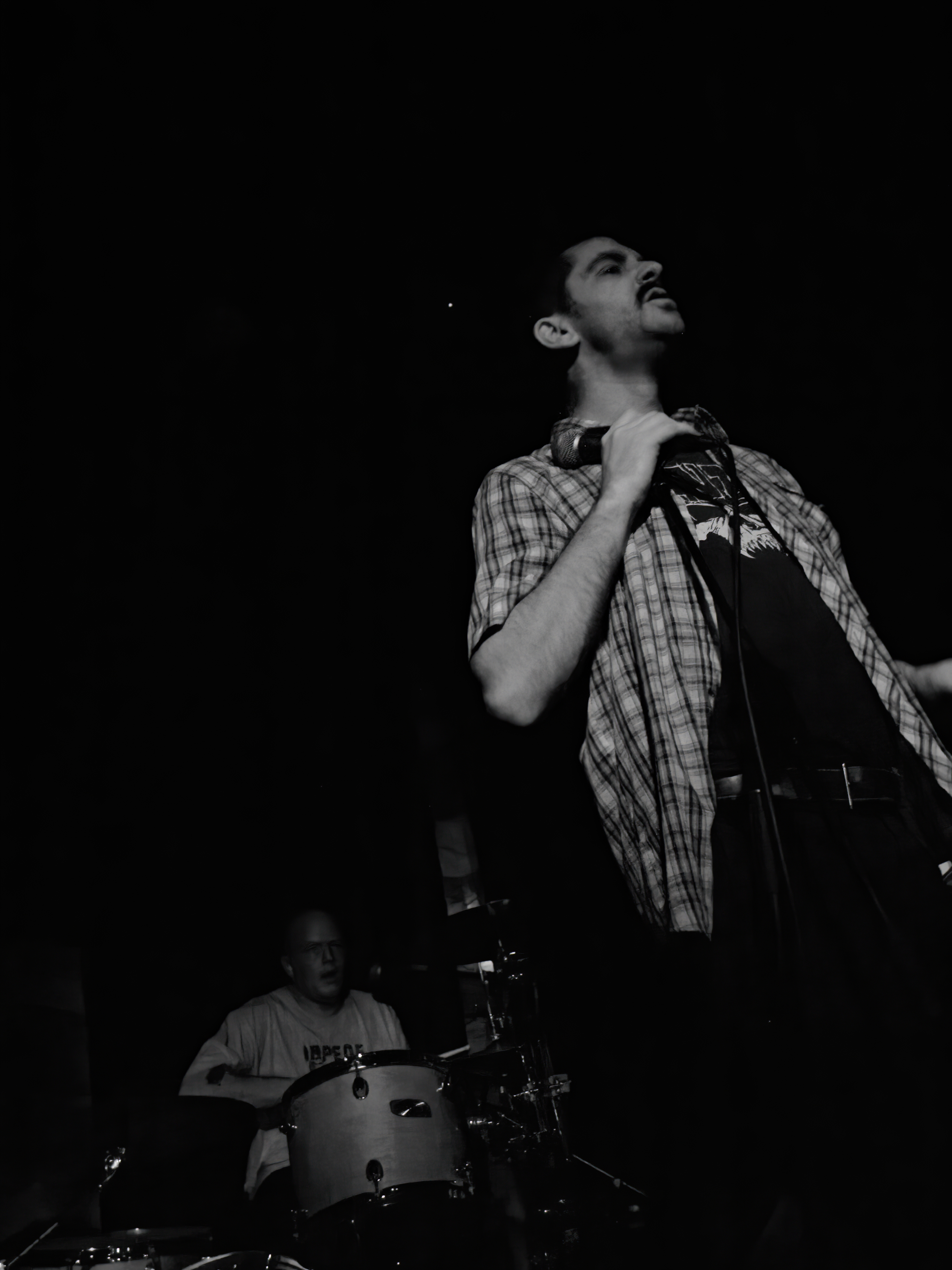
Last Saturday night the Adelaide hardcore scene converged on Jack & Jill’s Basement Bar for a benefit show to raise medical funds for Banjo Cox. In a typical show of support many turned out in the horrendous weather for an incredible night of top shelf music.
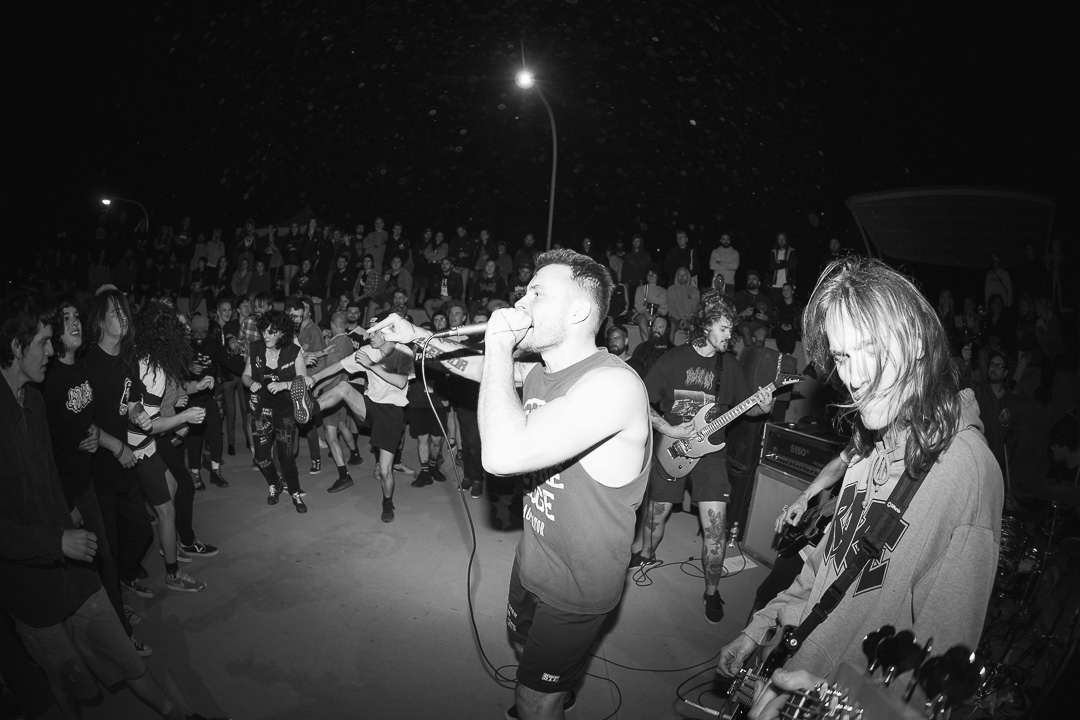
Jesse Conte, HumanXError
The Uglies opened proceedings with a sharp set of punk/hardcore originals. Lead singer Moose has a great sense of humour and put in an intense performance. The band was ferocious, their razor riffs propelling the songs and getting the crowd moving from the start. Their drummer also somehow managed to play fast and sing at the same time on some songs without collapsing – very impressive. They were a fun way to start the night and I’m super keen to catch them again.
Steve Cox, HumanXError
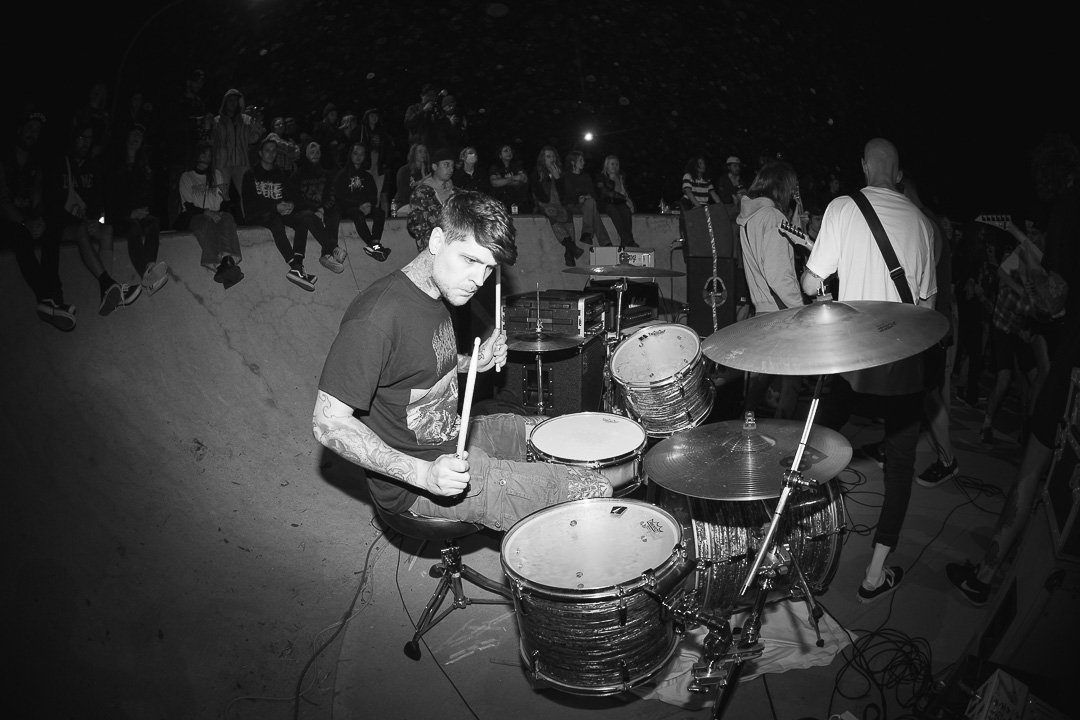
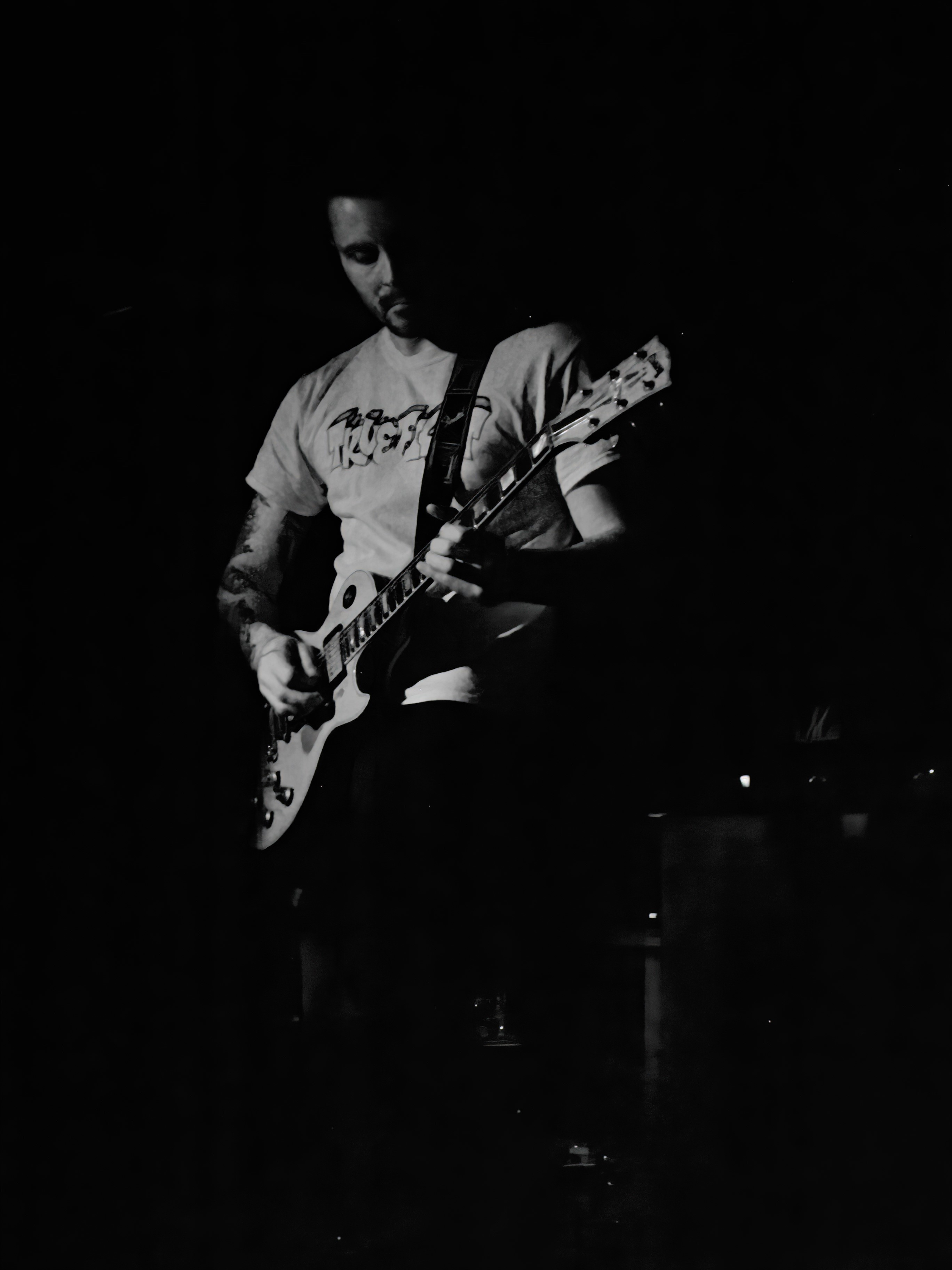
HumanXError were up next and played their final show. The band was only around for a short time but they achieved plenty. Their 7” ‘Your Faith in Ashes’ was a highlight of 2021 and their final act was to donate the proceeds of their entire time as a band to the Zahra Foundation. We were treated to a run through of the songs from their 7”. Singer Steve Cox’s important political messages came through loud and clear – especially with regards to dismantling rape culture. Musically the band were tight, with guitarist Jesse Conte’s versatile riffs ably supported by Billy Harness and Joshua Law’s brutal and groove-based rhythm section. It was a privilege to see this band perform one last time.
The Uglies
I somehow missed all but the last song or two of Culture Shock – they sounded sharp and fired up though.
The Weight
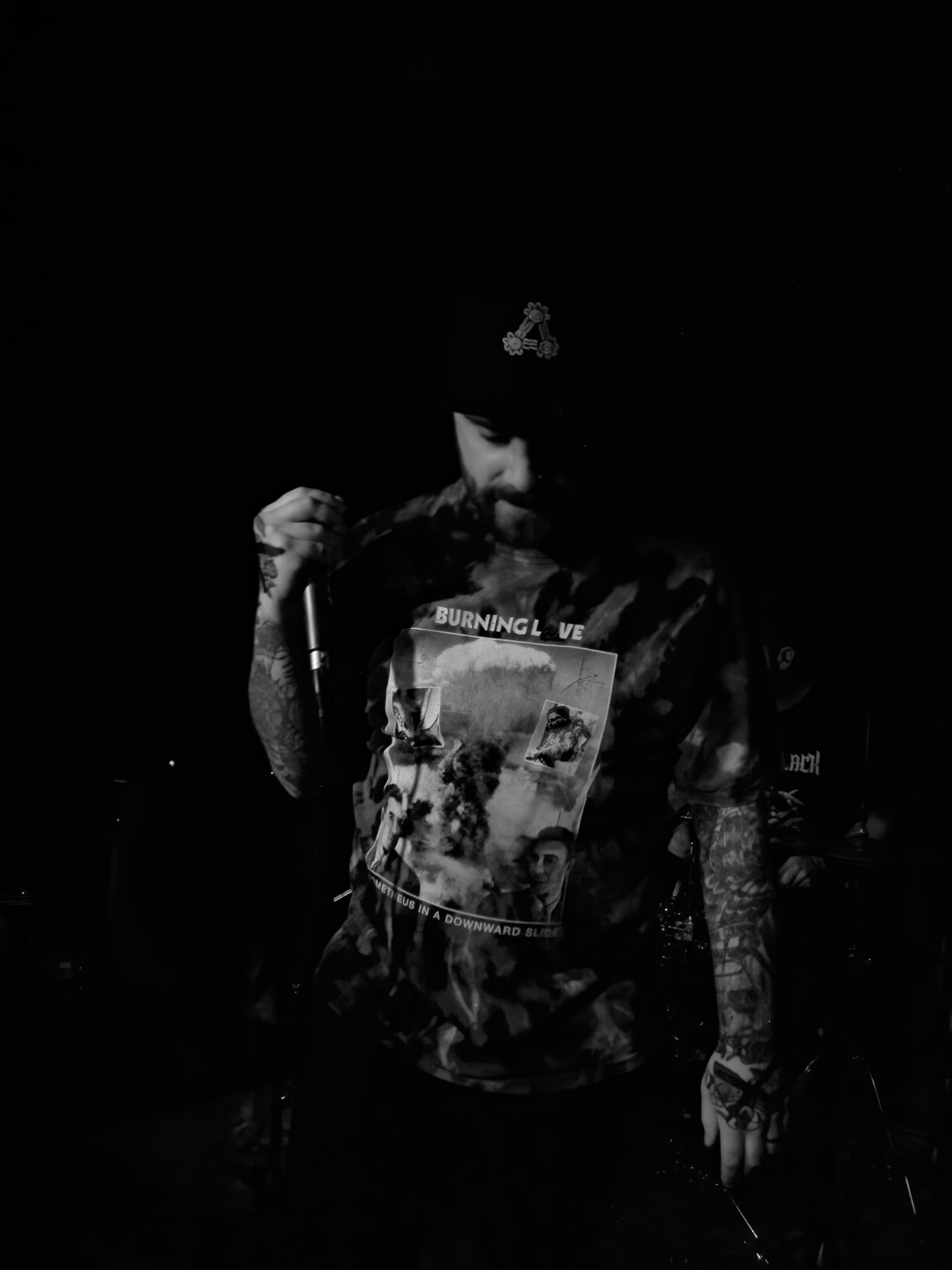
The Weight finished things off with one of the most ferocious sets I have seen in my life. They were tight, the riffs razor sharp and vocalist Ben had intensity to burn. They played a number of songs from their demo CD and album ‘Prisoners of the Flock’ (including my favourite ‘Speaking in Absolutes’) and whipped the crowd up into a frenzy. They’re justifiably considered legends – even though this was a once off show, they still gave it everything. The positivity and good will in the place were amazing. It was a killer night and one I won’t forget in a hurry.
Despite the icy conditions a good number turned out to celebrate the release of Idly By’s new single ‘Talk Me Down’. The band tore through a high energy set of old and new songs, three of which will be on their forthcoming new album. They opened with ‘Come Unwound’ and then quickly hit us with a couple of great new ones – ‘Have a Nice Time’ and ‘Feed the Machine’. Both songs feature catchy tunes and strong instrumentals – excellent signs for the next album. The band ran through a selection of old favourites (‘Concerned Realists vs M&Ms’, ‘Have You Got Enough’, ‘Eat the Rich’, which featured trumpet, ‘Dagget’ and ‘Don’t Want You to Die’) before we got to the new single.
Singer/guitarist Leith James is a charismatic and hyper front man (see his punk jumps!) – he’s clever and quick witted as well as being empathetic. His advocacy for breaking the stigma around mental health issues comes through in his lyrics as well as in his banter between songs. New single ‘Talk Me Down’ illustrates this perfectly in the guise of a pop-punk banger that gets you thinking as much as it will make you want to dance.
Idly By are a great band to see live, and tonight they were augmented with Mat Morison on keyboards for the full set and Clarrie on trumpet for a couple of songs. Morison’s keyboards added a layer of lush melody to the sound while the trumpet enhanced the ska feel of ‘Eat the Rich’. Drummer Luke Davies and bass player Tom (it was his last show before leaving the band) are a versatile rhythm section, giving the punkier songs sharp energy and the slower songs a danceable lilt. The melodic interplay between the guitar and bass adds to the memorable and catchy nature of the material.
Though Friday night was the end of an era for the band, it was also the beginning of a new one. The new songs sound great and they were as energetic as ever – anticipation is growing for the new album!
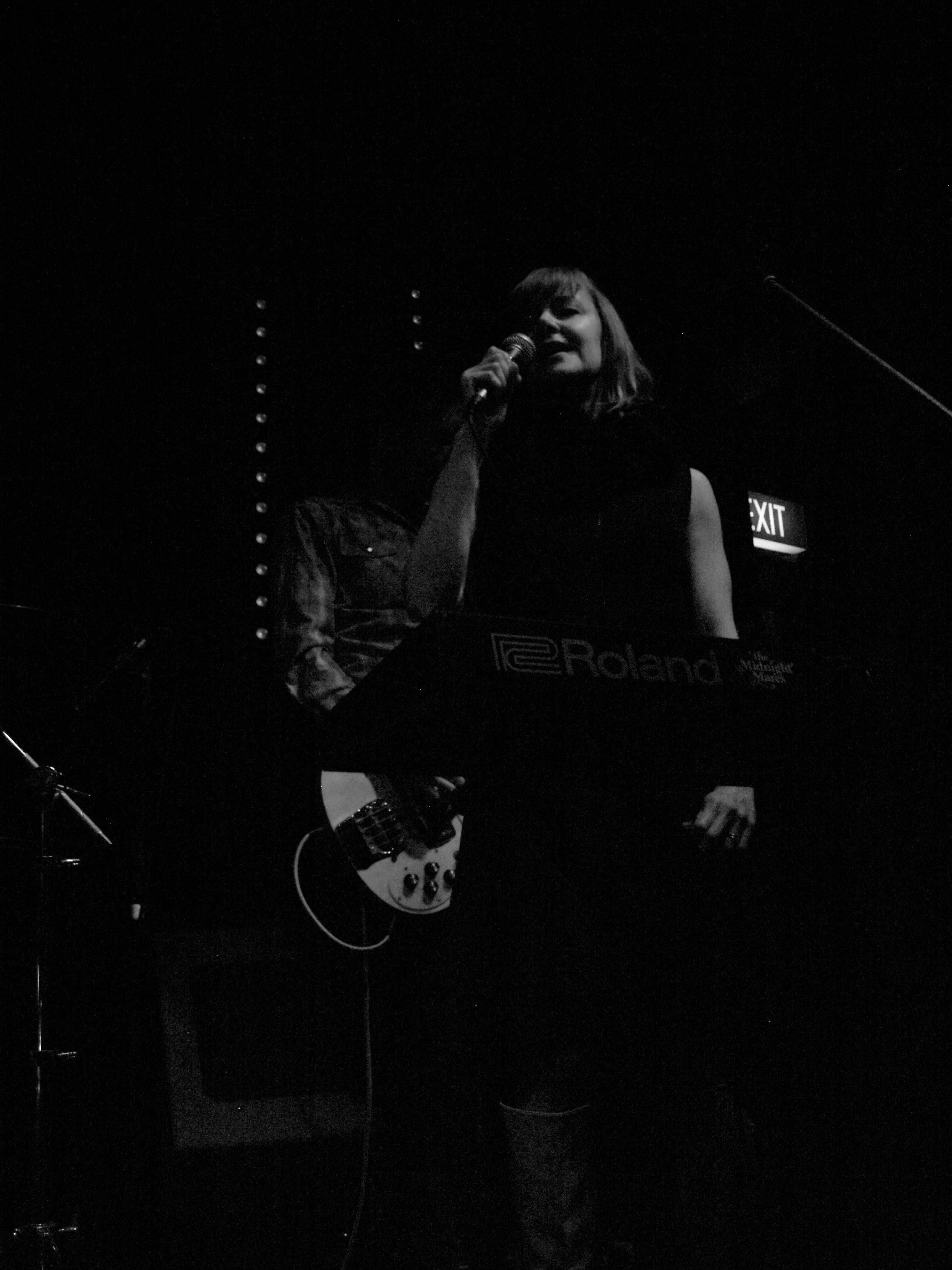
Sunday afternoon shows at the Grace Emily always turn out to be something special. The Midnight Mares performed a brief but excellent set of acoustic tunes, and then a longer run of electric songs.
The acoustic set began with two new songs – ‘Empires’ and ‘Grim Robert’ – memorable tunes that suited the acoustic treatment but would also work well with full electric arrangements. The acoustic set was mellow, but the performances still had grit – the stripped back Gothic folk arrangements allowed the songs to shine. Guitarist Matt Swayne, keyboardist Elizabeth Reid and drummer Peter Owen’s voices melded in spot on harmonies throughout the afternoon. Album tracks ‘Heads I Stay’ and ‘Too Dark for Me’ also benefited from the acoustic treatment, highlighting the melodic interplay between the keys and guitars. Bassist Denni Meredith is the band’s secret weapon – he plays a melodic style all his own that enhances the songs – they wouldn’t have the same impact without his contributions.
The electric set opened with ‘Endless Nights of Rock and Roll’, a song with a stately Bad Seeds feel to it, with Swayne’s sombre and atmospheric baritone vocal perfect for the lyrical rumination on the passing of time. ‘Sparks!’ is jangly and catchy guitar rock delivered in the style of the band that gave the song its name. ‘Lethologica’ was a highlight – Swayne and Reid traded lead vocals over swirling guitars and keys while gorgeous vocal harmonies accentuated the haunting chorus melody before ending with an epic, shimmering guitar solo from Swayne that captivated the crowd.
Though the band favours dark subject matter, they’re warm and friendly, engaging in banter with the audience and enlightening us with the stories behind some of the songs. It was fitting that ‘Heads I Stay’ originated at the Grace Emily and final song ‘The Don Cesar’ tells the story of lost love that inspired the building of a hotel in Reid’s native Florida. The sadness in Reid’s vocal performance on this song was palpable. The Midnight Mares are a dynamic and engaging live band whose performances are rare. If you ever get a chance to see them, don’t hesitate!
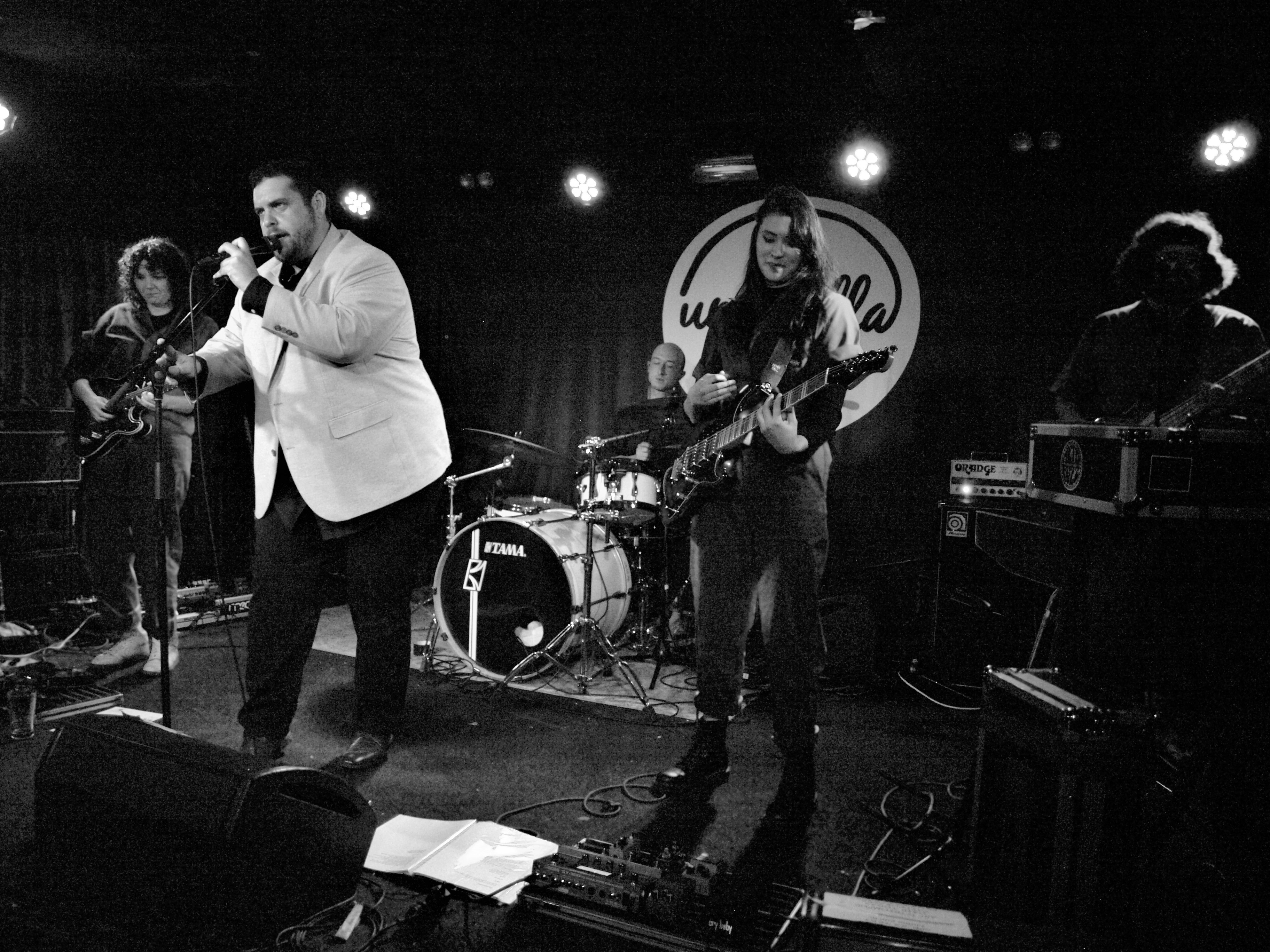
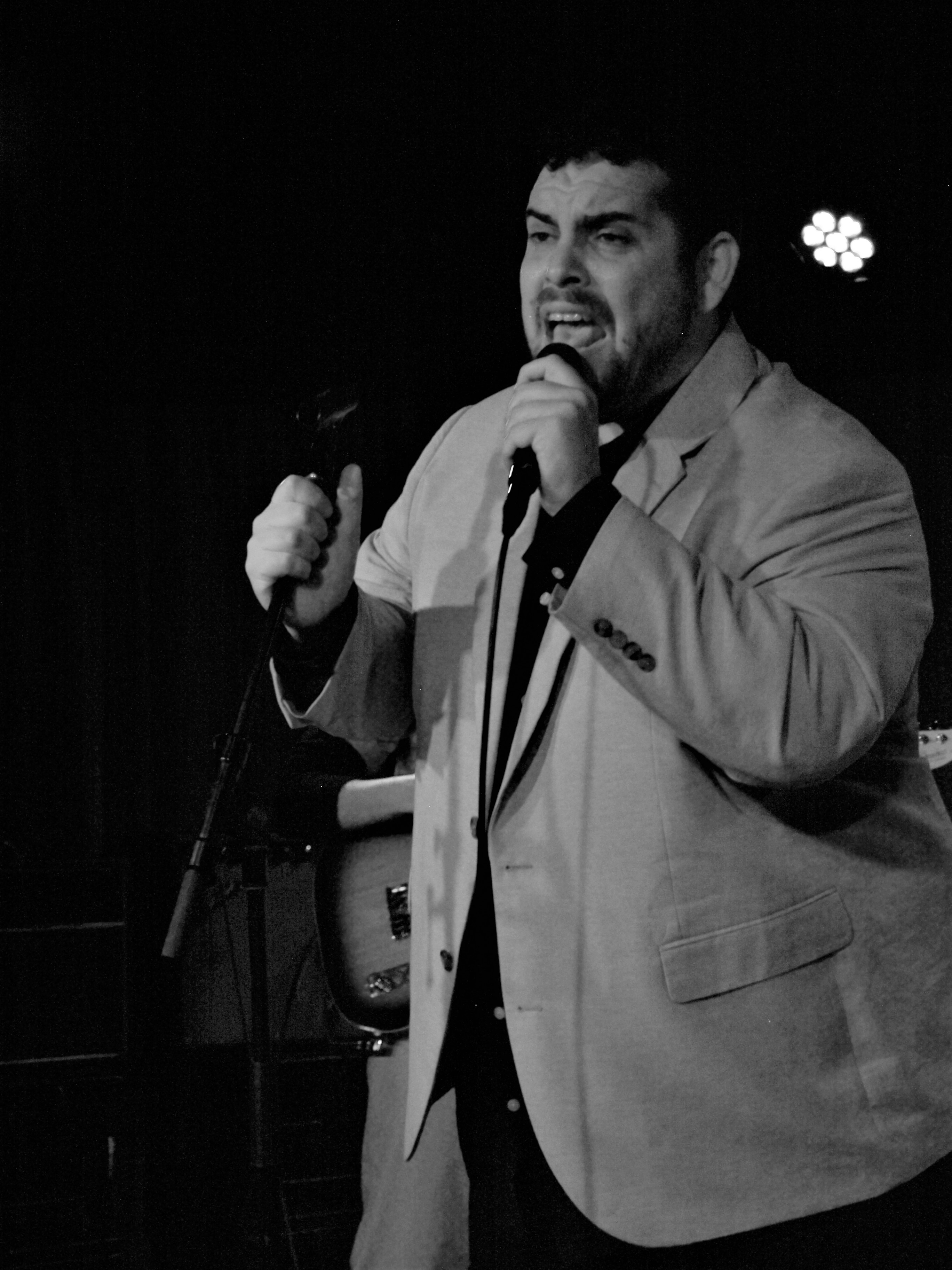
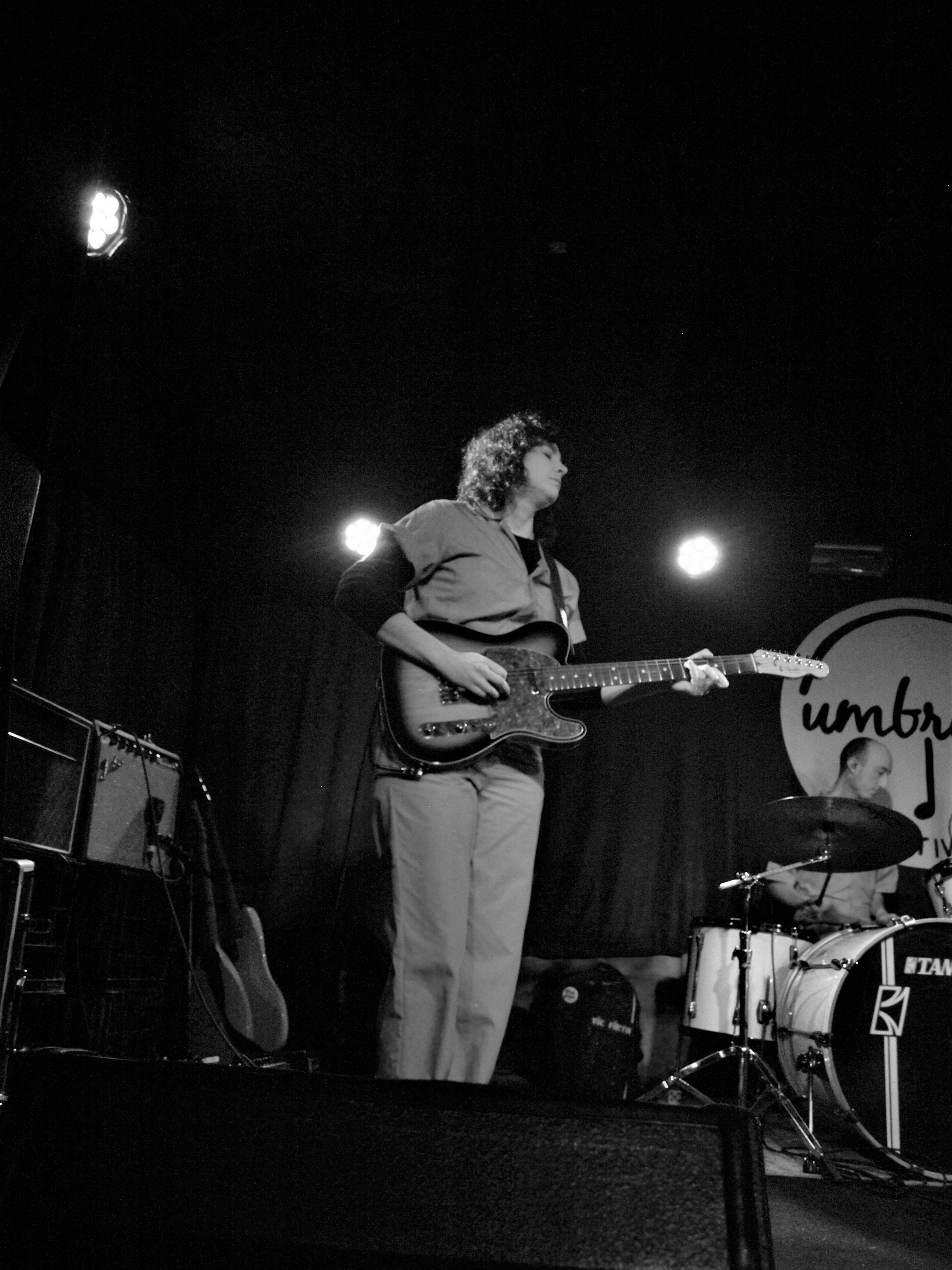
Street Legal opened the Umbrella Festival in style at the Cranker on Friday night. Though this was only the band’s second show, you wouldn’t know it, being a local super group of sorts. They play a mix of new wave, funk, punk and garage rock that had the enthusiastic crowd on their feet and moving.
Singer Matthew Hayward knows how to engage with the audience, and his timely political rants were accurate and well received. Subject matter for his songs ranged from FIFO dating to anti-vaxxers and one being a dig at our reprehensible previous Prime Minister. The band has written and arranged some excellent songs and they put in a dynamic performance. A fired-up cover of the Buzzcocks’ ‘Ever Fallen In Love’ wasn’t out of place among the originals.
Musically the band was tight and inspired. Guitarists Shara and Libby mixed spiky new wave and funk riffs with punky garage rock power chords while drummer Max and bass player Kyron held it all together and drove the grooves for each song. Used sparingly, percussive backing tracks added to the danceable nature of the bands’ sound but never overpowered the live instruments.
Street Legal may be new to the scene but each individual member’s experience playing in some of Adelaide’s finest bands has given them a head start. There’s a definite chemistry that comes across in their performance. They’re fun to watch, engaging and I guarantee they will make you want to move.
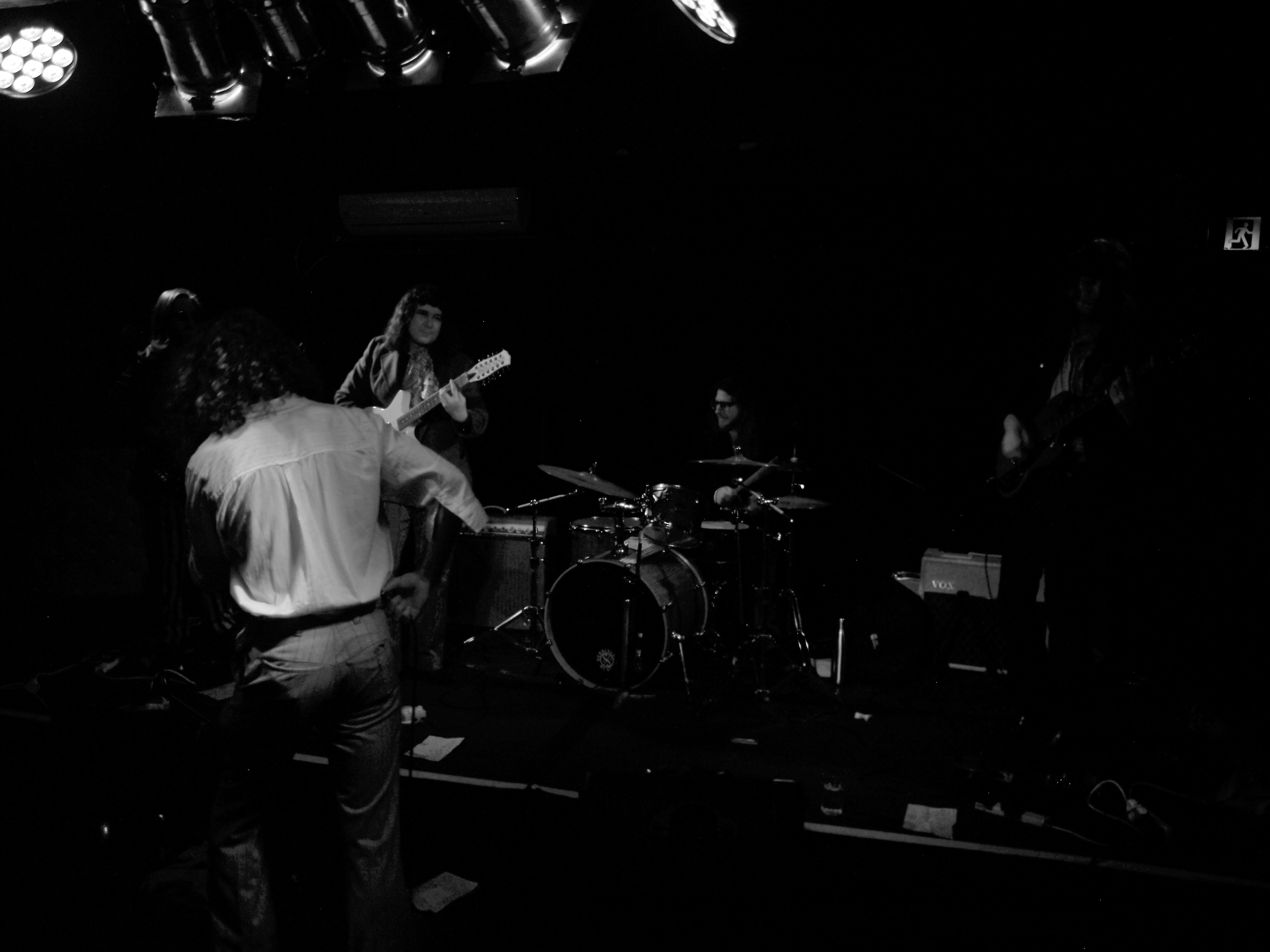
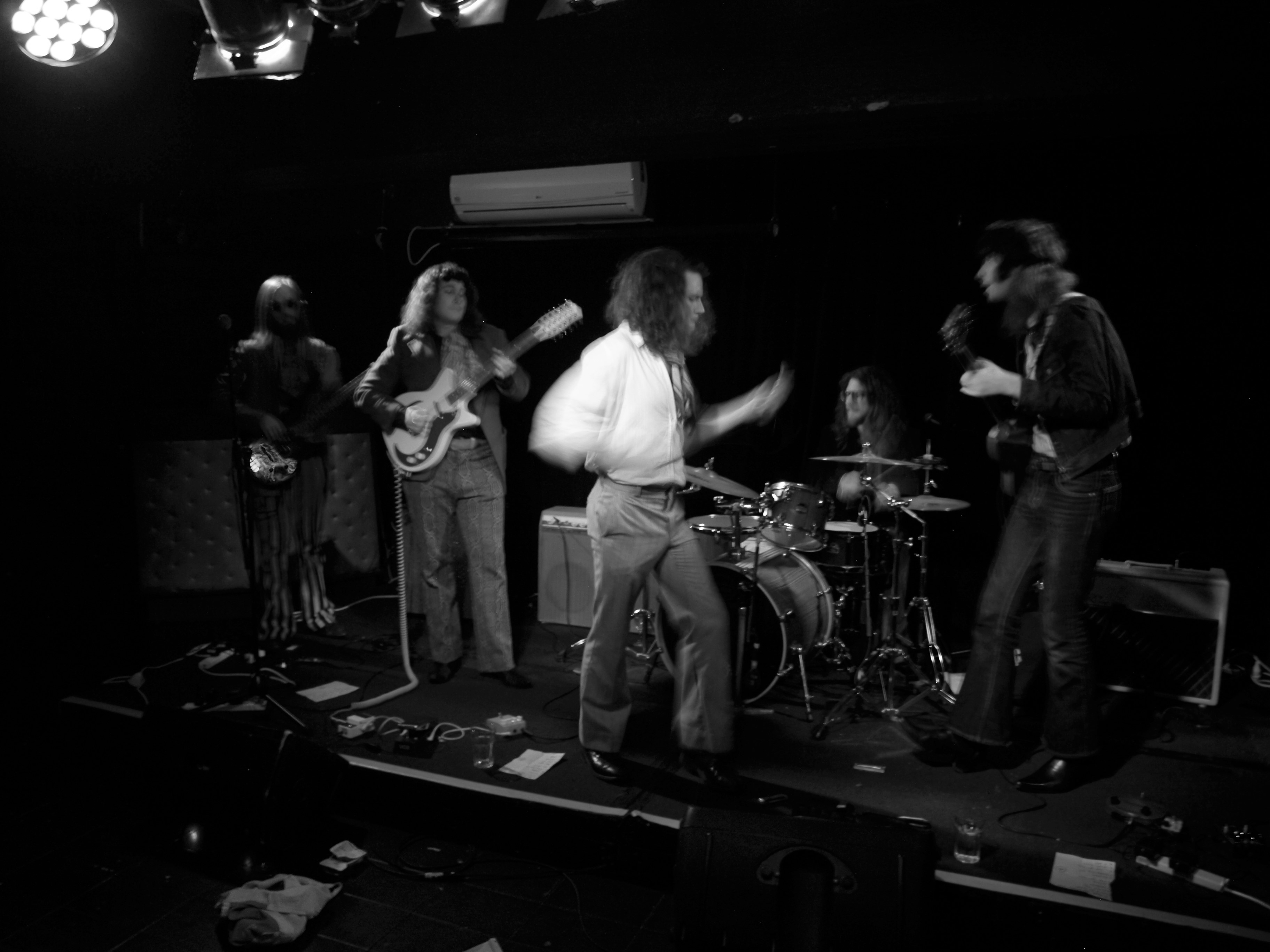
The Sundials are band that want you to dance. And they have the songs, the musical chops and the swagger to make that happen. Their sound and appearance is undeniably retro, but their performance is fresh and alive. It sure as hell isn’t just window dressing.
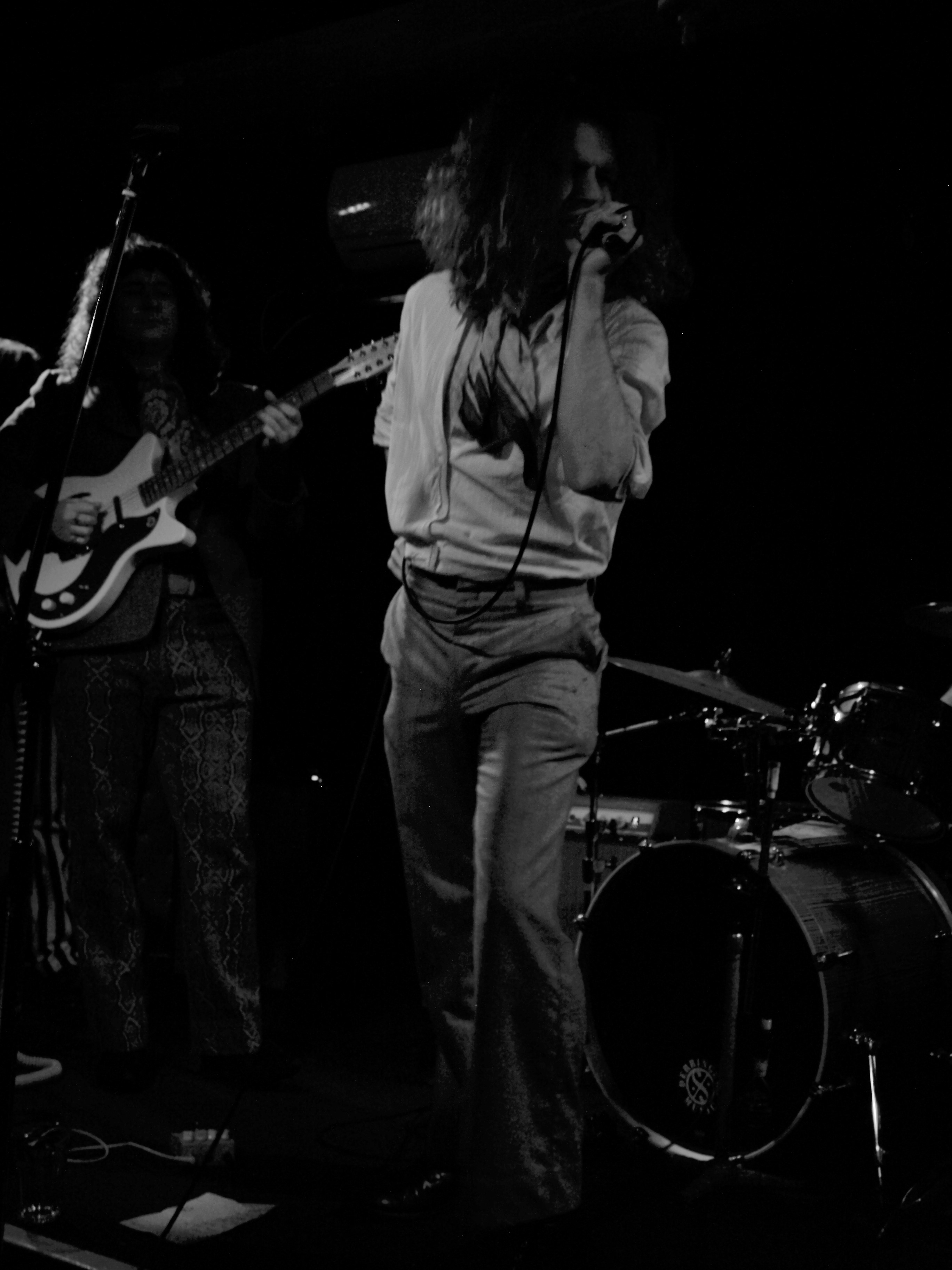
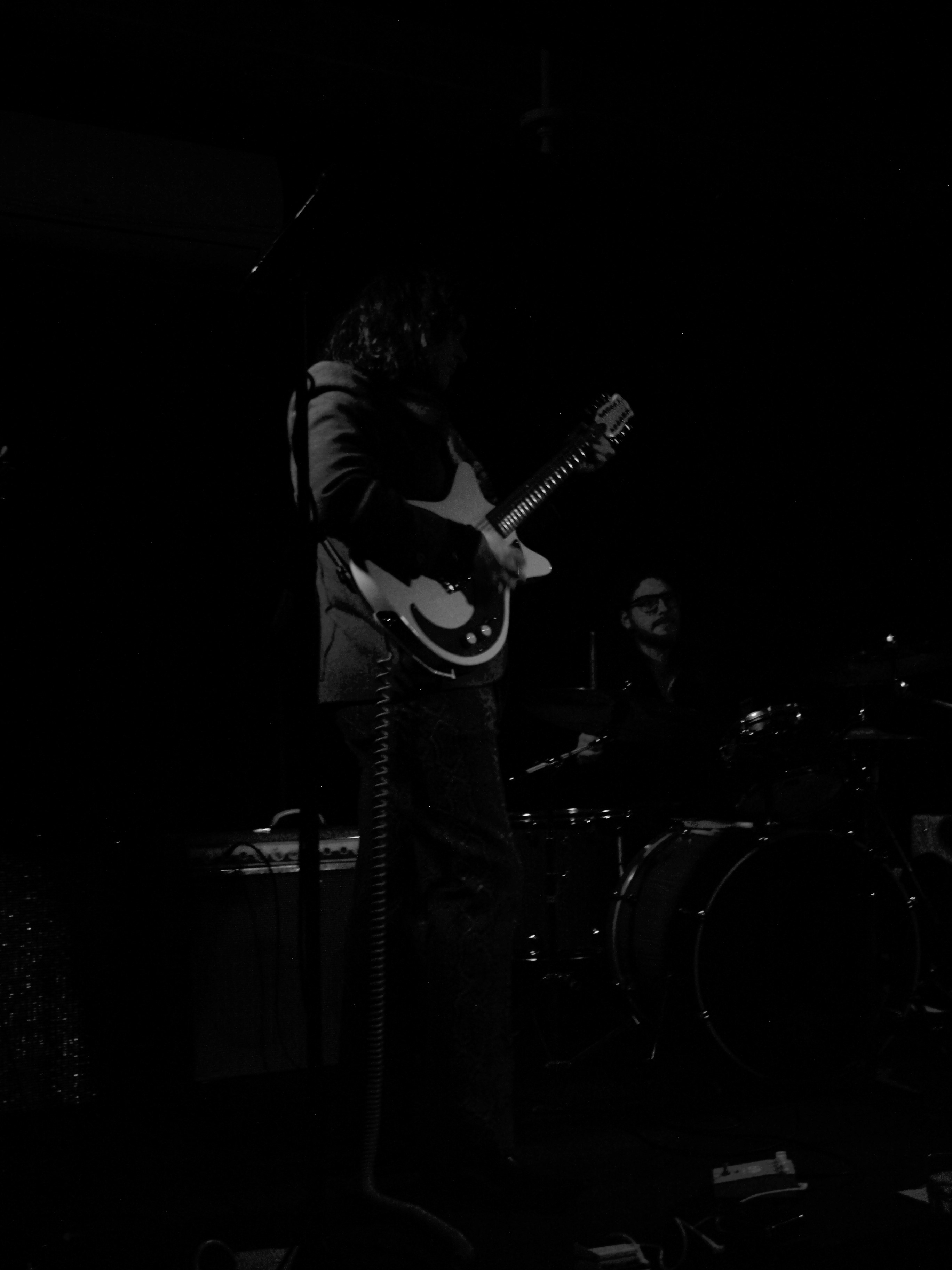
Last night at the Lowlife Bar they played a short but very sharp set of Stonesy rockers with a few funkier numbers thrown in for variety. Their originals are well written, catchy and danceable. It’s easy to get caught up in their impeccable vibes and forget that you just had terrible day at the office. The rhythm section captures the groove of the Stones at their loosest but tighten it up a bit. The guitarists lay down a combination of razor-sharp riffs and bluesy and at times melodic solos. Singer Dieter Horvat has a keen ear for melody and a powerful and blues tinged vocal delivery that suits the band’s sound and swagger to a tee. He rarely stands still, often running out off the stage and singing and dancing with the audience – it’s a good way to get some crowd participation happening. He also threw in the odd harmonica solo to mix things up a bit.
The Sundials are a fun band to watch. The 12 string Rickenbacker guitar adds to the late 60s/early 70s vibe, as do the band’s clothing. Their searing cover of the Stones “Bitch” slotted seamlessly into the set. The Sundials musicianship is top notch and they have the songs and intensity to match – and probably have about an albums worth of originals already – I’m very keen to see where they go next. Check them out live if you can, I don’t think you’ll be disappointed.
Sines have been playing around Adelaide for a couple of years now and with roll out of their debut album are beginning to pick up momentum. With a tight and dynamic live show and great song writing chops they’re definitely one to watch. Sonic Vandals sat down with singer Caitlyn Hearne and guitarist Matt Gelling to chat about the band’s origins, the benefits of studying jazz, and their influences and song writing inspiration.
Sonic Vandals: Tell me about the band. How did you start? How did you all meet?
Matt Gelling: So I first started working on this band back in 2016. I formed this band and started working and writing for it after my old band had just split up, which was a band called I Exalt. After that band broke up, I was a little bit over doing the metal heavy extreme kind of thing. I wanted a band that was a little bit more diverse and where I could put in many of the different styles of music that I was listening to at the time. Like Post Rock, a little bit of aggressiveness and also something that’s a little bit more accessible to people as well. Unfortunately, extreme death metal is not exactly the most accessible genre in the world.
Caitlyn Hearne: A bit more of a niche market.
MG: Yeah, exactly right. I started writing all that music, but one of the biggest lessons that I had learned from my time in that band was how important it was to have the right people around you. While I was doing all my studies and all that, I was waiting, just trying to find the right people, and it took me quite a few years to get there. Fast forward to about 2018 and I started doing a bachelor of jazz at the Adelaide University.
SV: Right, I can hear that.
MG: Yeah, just a little bit. And from there (Adelaide Uni) I had met Caspar and Lenny beforehand and.
SV: Bass player and guitarist?
MG: That’s right, correct, yeah?
In the back of my mind, I didn’t think they would be interested in that, but I thought you know what, let’s run the Hail Mary and just see what happens. I knew that were phenomenal musicians and they seem like good people as well, so I asked them and they go “Yep, all right”. For about a year we had just the three of us and we were bouncing a few ideas off of each other for a little while. About a year later, we thought of who we’re going to get for drums, and that’s when we had the idea of getting Zed to play drums. He had also done the bachelor of jazz and as I said, is an absolutely phenomenal drummer. And once again I thought nah, he’s not gonna do it. So I sent a message and he said “Yeah, sure I’ll do it”.
MG: One of the biggest issues that I had when trying to find the people for this band was trying to think of a vocalist that I wanted. What I originally had in mind, I auditioned a few people to do it and to put it as kindly as I can, they didn’t quite fit what I wanted. Caitlyn had done a few cover gigs with me beforehand and she did an absolutely fantastic job learning a stupid amount of repertoire in very short time. In about a day or two or something like that. And at one point I think I was talking to Caitlyn, I thought “Yeah, bugger it, right? Let’s ask her and see what happens”, so next day, same thing again. I thought she would also not really be interested, but she said “Yeah, I’ll do it”, and that’s how we got started.
SV: Have you studied jazz as well, Caitlyn?
CH: Yes, we all went through the jazz course.
SV: How do you guys write? Do you write all the music?
MG: I write the majority of the music. What I generally do is for the instrumental side of things I’ll usually write skeletons. Here’s the ideas, here’s the melodies, and then I’ll bring it to the band and then they’ll put their two cents on it. So, especially with things like rhythmic patterns, the rest of the band are absolutely phenomenal with that. And then from there Caitlyn will put her vocals over the top and write her lyrics and somehow it all comes together.
CH: Matt will send me demo versions of the instrumental, and then I’ll write the melody and lyrics over that and then we might rehearse it as a band. We might change a few things here and there and go from there.
MG: We try to find ways as a band to keep tightening everything, to make sure there’s no fat to the songs but there also nice, interesting little quirks along the way. It needs to be accessible to people, but we’re also all jazz musicians, so it also needs to be interesting for us to play as well
SV: Yeah, well, there are definitely lots of interesting little quirks. There’s one song, I can’t remember the title but its halfway through the album and it’s got that little eastern sounding breakdown in the middle. I love that that’s really cool. It’s definitely an interesting album. There’s so much different stuff going on there, it’s accessible to. Caitlyn, what’s your history before this band, had you been in any other ones?
CH: Not in this genre. I was in another original band called Burjon, it was very different music, and I didn’t have anything to do with the writing. In probably year 12, a friend introduced me to bands like Northlane and Karnivool and stuff. I loved that music because when I was younger, I loved Evanescence. Like I would walk around- and I was like, 5- walking around with my little Discman, just going for it. I guess I grew up loving that kind of music and then had a big phase of it in year 12 and then haven’t really revisited it since. And then when Matt asked me, if I was keen to try writing something over this track, come in, see how you go, that was really exciting. It’s so cool to revisit this and to actually have something to do with it in an original creative sense as well, not just consuming. I wasn’t really in any other original bands that I’d kind of written for, so yeah, this was nice to get my writing chops up.
SV: What about the lyrical themes what sort of stuff inspires you there?
CH: Yeah, a lot of mental health stuff. I guess going through those phases especially late high school and through UNI where I really struggled with body image and that whole relationship with body and food really played a big part in I how I felt from day to day and the ups and downs of that.
SV: I think that’s a real big problem in society today for so many people. That’s something that really needs to change.
CH: Yeah, and that’s it, it is so pervasive, if that’s the right word, you just don’t really appreciate how many people experience that, and it’s not just girls. I kind of drew from I guess the emotional and mental struggles from around that time. This kind of music is really good for just digging deep into the nitty gritty of those hardcore kind of emotions, which is nice.
SV: It’s good for catharsis.
CH: Yeah totally. The songs are very mental health focused in that respect. Exploring the pain of the experience, but also the lessons you learn through it all
SV: That comes through, definitely. And your vocal style, there’s definitely some different influences coming there. There’s one song on the album that where you have a bit of an R&B sort of thing going on. It’s a ballad, track four, the name escapes me right now. The fire?
CH: Oh yeah, Awaiting the Fire.
SV: Yeah, I’m terrible with song titles.
CH: Did you get sent the songs?
SV: Yep
MG: Yeah, they were the correct titles though.
CH: Oh ok, I didn’t know if you’ve heard the rest of the album.
SV: Yeah, yeah, I have.
CH: Yeah, awesome cool.
MG: It always takes me a second to remember the titles myself because we spent so long with all the song titles being these different code names.
CH: Yeah, the working titles they tend to stick.
MG: Every single time I’m writing a record, there’s usually an umbrella code name, so for this one, almost every song was like titled after some colognes, so Aventus or Sauvage or something like that. So just trying to remember what the actual song titles are is a bit of a struggle as well.
CH: Now when we’re at a gig and I’m calling the actual name of the song I’m like, “Oh, is that this one?”
MG: I’ve had to put in brackets all the code names, so that all of us can remember.
CH: For example, Rescue the working title was Filth.
MG: That was because of the guitar intro, I just stumbled across it and thought “That’s filthy, that feels right, that’ll do.”
SV: I’ve actually seen that before, one of my daughters she comes to a lot of shows and she’s always stealing setlists from bands, she collects them, and I’ve seen other bands do that for sure, it’s probably a common problem.
CH: Yeah, getting used to the first label you put on something it kind of sticks.
MG: One day we’ll remember the actual titles. Maybe!
SV: So Matt, what inspires you to write?
MG: So you have your musical influences and all that. I mean, I love the post rock genre because I love the reverb, which obviously there is an enormous reverb influence on this just because it allows you to get lost and immerse yourself within the sounds. As much as I have attempted to stay away from it over the past couple years all the metal stuff is going to be there, a little tinge to it, a little something, a little aggression in there. But in terms of what I actually write and what I wanted to connect to people, or what I want people to hear, it’s more….This is my wish mentally, but this is my personal thoughts and feelings in this form, if that makes sense. It sounds a little wanky, but for every creative I do believe that this is our, I think you said the word before, catharsis. If every creative person was able to say what they wanted to say in words, then we would never have a need for music. So for a lot of the music that I write I’ll think of an experience in my life, and how does that sonically reflect this? For example, to take a particular thing that siren, the Middle Eastern theme in what’s the song called?
CH: Run?
MG: No, not that one. The heavy one. Aventus.
CH: Oh, Waking Up.
MG: And we were just talking about that. “Waking Up” that whole siren thing that’s meant to represent a particular stage where everything is falling apart, and you’re left by yourself. Just absolute silence. The siren represents that I’ve got tinnitus in my ear. So when I’m by myself, that’s all I can hear and that note that that siren is, is that exact same note. So that’s the representation of that when everything is falling apart, that’s the only sound you can hear and nothing else. A lot of it is purely experiences that I’ve had, how I want it represented in a sonic form or different feelings and things like that. That’s how I’m influenced musically and how I want to be creative.
SV: There’s definitely a lot of attention to detail in the recording, and that explanation makes a lot of sense.
CH: I didn’t realise the tinnitus thing.
SV: And then the drums come back in, the double kicks and off it goes.
MG: Pure fury and rage.
CH: I think that song particularly it is more, I don’t know if metal is the way to describe it. A bit more hard hitting in that respect, so it kind of draws from that world so there’s that element of, yeah, we gotta get some of that in the album.
MG: Yeah, that whole song is meant instrumentally as a fall. You’re going through the motions of an emotional episode, let’s say that.
SV: It doesn’t follow the standard verse chorus verse structure either. It’s obviously a journey, right?
CH: And I found that one hard to write over, but it was good, yes.
MG: The whole thing with that song is a little bit more intense than the rest, but at the start it’s meant to be neither here nor there. At the start, it’s not really angry or happy, it’s just there, and then it slowly meant to descend into more and more darker themes and then slowly get out because that was a particular experience I had at a certain time. Everything was kind of neutral. Everything was kind of neither here nor there, and then there was that slow descent into in a not very nice place and then slowly getting back out of it again. So every single song on that record – there is an intent for every part. There is a specific story or experience or something that I had that I wanted to put out there
SV: Having seen the band live, I can see there’s a chemistry between all members.
CH: We all get along very well, Caspar, Lenny and Zed are just the loveliest human beings, and very funny people. Good vibes in the band.
MG: It’a very easy group to work. There are no egos or anything like that. Everyone knows what they need to do. Everyone knows that you rock up, be prepared, bring something to the table, have their own two cents and their opinions which are way more often than not enormously beneficial. It’s about creating an emotional connection on stage and all that, I am a big believer and I have been since about 12 years ago when I played my first gig. If you’re playing your own music, you need to mean it, people aren’t stupid, they know if you’re getting on stage, just going through the motions. But if you’re on stage and you mean what you are expressing, if you mean what you’re playing and that’s it, people can see that there’s that weird energy connection thing. That weird mystical thing that people understand but can’t explain but understands. And that to me is the most important part when you’re playing live is to mean what you play.
SV: Absolutely, and that definitely comes through. I had no idea what to expect going off the name. But that’s another question I wanted to ask you was the origin of the name and if there was any meaning behind that.
MG: The band name has the least amount of meaning, but even then even then – way back in 2016 – a quick little connection – there was a metal band that I really loved called Fallujah and they had an instrumental track called “Alone With You” and this was the first time I was aware of ambience in this sort of thing, so I went on a massive spree trying to find any genre that sounded like that. Which then brought me to post Rock and discovering all those bands. Then going through post rock channels, I discovered a band called Jacob from New Zealand and the first song I heard from them was “Blinding with Science” on an album called Sines and I kind of took that name as a pet project, but the more that it kind of sat there it was like, “I like this”. This is a nice little nod to where this thing started from. The only problem with calling the band Sines is I’ve now found every time I try to tell somebody the name of the band, they say “what’s your band called Science?” No – S I N E S!
CH: Yeah, and also some people ask me is it Sin-es or is it Science, because I guess like I if you haven’t really heard about a sine wave then you it might not click. You might pronounce it differently.
MG: So it has some drawbacks. But yeah, that’s where it came from.
SV: I do have a question that relates to the fact that you’re all jazz musicians. Did you guys all finish the course? And something I’ve always found really interesting is that people who are really good musicians technically aren’t necessarily good at writing or creativity, they don’t necessarily have that emotional connection to what they’re doing, but you guys clearly do. You can write good songs and you’re doing it for the right reasons. How does having that jazz background help you to write songs, how does that help you translate the ideas that are in your head into reality. I’ve played in a few bands over the years and done all sorts of different musical things and things rarely come out sounding the way they do in my head. How does the jazz background assist you to bring out your vision?
CH: I’m not a jazz musician, I studied the jazz course so that I could learn as much about music in that period of time as possible, to give me more tools as a songwriter and to be able to speak more of the musical theory terminology and language to better communicate with the band about things that I want in the music. I enjoy listening to jazz and singing jazz a lot but since then I haven’t really done any any jazz gigs or anything like that so I’m definitely not a jazz musician. But it it definitely helped, it helped developed my ear and my music theory knowledge. If there is something a bit trickier like for example, one of the songs “Survive” in a bridge section, I’d written something over that section, and something didn’t sound quite right. I think I spoke to Caspar about it and he said “oh, it’s because of this key center and you’re singing this while I’m doing this” and that made sense. Whereas maybe if I didn’t have as much knowledge about music theory and having that understanding of why it clashed, I wouldn’t have been able to rewrite it as easily. That’s just one example. I studied it as an aid for original music rather than I really love jazz.
MG: I have an enormous love-hate relationship with jazz. One day I will tolerate it the other day I can’t stand it, so it depends on the day. The original reason why I went to the jazz course was after I finished my diploma, I needed something to do and I kind of figured that there’s still more to learn. Caitlyn, just mentioned about the language of music and understanding all the different parts of that. One of the benefits of jazz is that it uses everything, every single device that you possibly think of. Also, it’s not enough to know just a little snapshot, you need to understand every single thing that’s going on.
CH: Like any genre, it’s just a big umbrella term, there’s so much within that, like Latin and ballads and swing and everything in between.
MG: Exactly. One of the one of the biggest frustrations that I had when I was doing I Exalt, the band, before that was I could have ideas in my head, I just didn’t know what I had to do to get it out. So studying the Jazz course allowed me to understand. “OK, so this is what’s going on in my head, so this is how I get it out onto here” because I will be forced to learn all the wide spectrum of what everything actually is. For me personally in terms of, the writing, you mentioned before there are like amazing technicians who are very logical if they’re creating, which can be expressive, or maybe not, who knows? My thing is always about writing something that is an experience of feeling or whatever, so there are times, especially at the start there are times I’ve written something and go “This sounds cool, we’ll work with this” then I’ll go to Caspar and Lenny and they’ll say “Oh, this is cool, you did this thing, you did some time modulation” and I’ll be like “I did?” Well, thanks for explaining it to me and now I know what it is, but that’s just what I had in my head. So the Jazz course definitely helped understand a lot more. I have an idea in my head, this is what I want to do if it makes sense, great, if it doesn’t make sense, oh well, as long as it sounds good and has a purpose.
CH: You don’t necessarily have to study jazz to be able to do that. Going into I was like “oh well if you’re good at jazz, then you’re good at anything – well, not really, but that was my kind of mindset going into it and you don’t have to study jazz to be able to do all that stuff. But you know, it’s a structured, institutionalized course. You’re practicing music nonstop for three years, so you’re going to get better and that’s going to be beneficial in in other areas, but yet you don’t have to just studied jazz to do that.
MG: As Caitlyn just said, it is very institutionalized and that’s not necessarily a knock, it’s just it is what it is. But when you come out you’ve learned so many tools and when you’ve done this you want to do this, you want to do that and also the song comes this overly complicated thing that doesn’t make sense to your normal person in ways, it’s this abstract thing, so I think it’s important regardless of how advanced you become as a musician or as a songwriter or as a creative or whatever it is, you have to remember what you’re writing the music for.
SV: You always want people to be able to relate to it without having a jazz degree.
MG: Exactly.
CH: As you get better at something there is that temptation to – I didn’t really feel this in the jazz course because I was always catching up and struggling – but I guess there is that temptation to show everything you got, in that culture of trying to show all of the things that you’ve been practicing for the past month and here’s everything you know – here’s all the complex stuff and more complex than better. I guess there is a temptation to do that as you find more facility on your instrument but you gotta use it with taste, I suppose.
MG: Gotta write a good song, man!
SV: Well, that’s interesting because one of the other interviews I did just a few weeks ago was with Chelsea Lee Smart. She talked about jazz quite a bit and one of her issues was with how restrictive it was, and she wants to get up there and rock out sometimes and you just can’t do that.
MG: I used to get in trouble whenever I did my performances for moving too much. I was used to head banging, stomping my feet on the floor and moving around being a nuisance. Now I’m going to a jazz course and have to sit, stand still and play! Yeah, I definitely understand the want to just rock out and have some fun.
SV: For sure. You see guys like Django Rowe and Ben Finnis or playing in rock bands as well as and their bloody good at what they do. In fact, it’s amazing how many of my favorite Adelaide bands are full of jazz musicians. It definitely has its place, and it is a good breeding ground for creativity, I think. Where do you see yourselves going?
MG: So particularly over 12 months, we’re going to continue playing more and more Adelaide shows continue growing the bands and as soon as possible continue start to push interstate as much as we can.
SV: That’s been hard thing to do in the last couple of years.
CH: I joined at the end of 2019 so just pre COVID. It kind of put a stop to things for a while but we were still writing and getting things together. I’d only just joined, and I was still writing stuff, so you know it wasn’t the end of the world. But yeah, certainly has affected everyone in every industry really but especially the arts.
MG: More Adelaide shows, go interstate then take over the world!
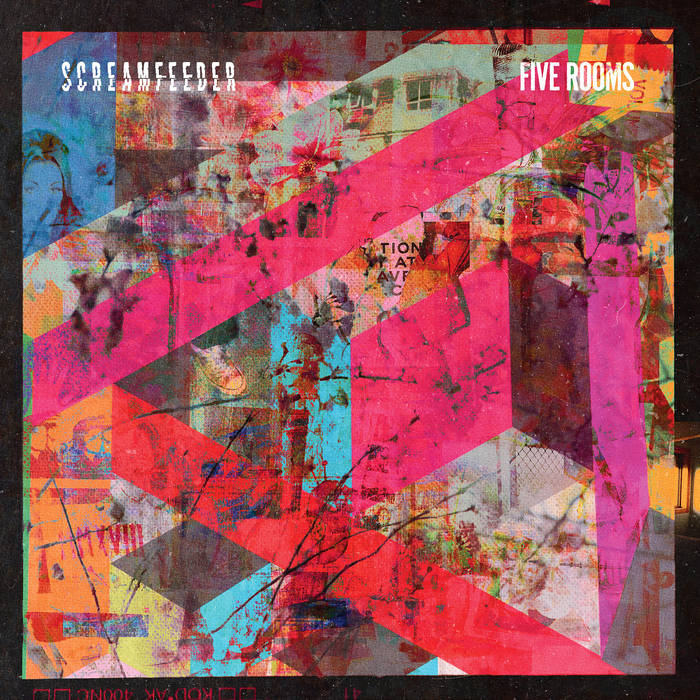
Since starting out in Brisbane in 1991 Screamfeeder have played in Adelaide more times than I could possibly remember. They’re one of the best bands this country has produced and are still going strong after three decades.
Their brand new album ‘Five Rooms’ opens with ‘Day Crew’ – a short and sharp song that gives the album its name. The Tim Steward sung track captures the anxiety and uncertainty of living through covid and wraps it up in a catchy melody. ‘Don’t Get Me Started’ is a new wave-ish song with a spectacular Kellie Lloyd bassline and a hooky melody that will get stuck in your head. Steward and Lloyd’s vocal harmonies are effortless and a comforting presence, the kind that come about after 30 years of friendship and playing in the same band.
‘Late to the Party’ is all 90s style shoegaze guitars and atmospheric vocals. The song opens with a gloriously messy/noisy guitar solo before Lloyd’s vocal emerges from distorted and feedback drenched guitars for the remainder of the track. ‘Deirdre’ – a song about a friendship or relationship that has gone wrong because the parties have changed over time – is as close as the band gets to their indie punk origins. ‘Break it Clean’ features lush vocal harmonies and guitars with lyrics about the desire to make a fresh start. ‘State to State’ is another catchy and upbeat song with incongruous subject matter. Album closer ‘Try to Find Us’ is an intense but haunting song that poses questions about the perpetuation of the patriarchy and male violence. The song doesn’t provide answers, but it doesn’t have to. These are big questions that need to be properly examined and addressed and putting it out there is only the start. It’s a complex issue that will take time to unravel and dismantle.
Screamfeeder have been an essential part of the Australian indie rock scene for three decades now and they have nothing left to prove. They could have continued to tour off the impressive quality of their back catalogue like so many other lesser bands. Instead, they’ve released yet another superb record that adds to their already substantial legacy.








 Sonic Vandals